
- Clyde & Clyde North LocalsCity of Casey specialists
- Free Onsite MeasureWritten quote, no obligation
- Built for Casey ClayProper base, steel & joints
- Quality GuaranteedClean, level, finished right
The look of stone, the strength of concrete
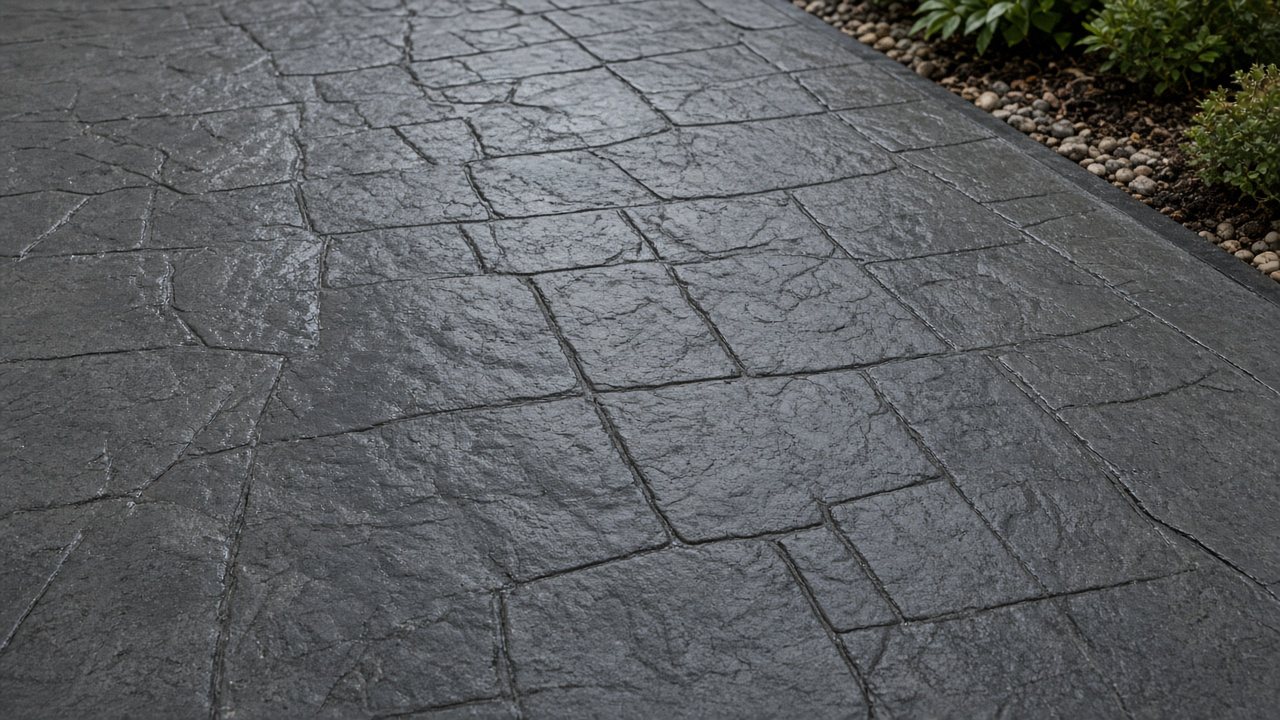
Stamped concrete, also called patterned or imprinted concrete, gives the look of natural stone, cobbles or timber boards with the strength and continuity of a reinforced slab. There are no individual pavers to sink, spread or grow weeds between. It's a feature finish, most popular in Clyde and Botanic Ridge for entries, turning circles, porches and alfresco areas, and on homes with traditional or Hamptons-style facades.
How stamped concrete is made
- A coloured concrete slab is placed on our standard base and reinforcement.
- While it's still plastic, a colour hardener and a release agent in a contrasting colour are applied to the surface.
- Textured stamping mats are pressed into the surface in sequence to create the pattern.
- Once set, the surface is washed to leave the release colour in the grout lines and texture, giving depth.
- Control joints are cut, often along pattern lines so they're hard to see.
- The slab is sealed with a film-forming sealer, with anti-slip grit for driveways and wet areas.
Popular patterns
- Ashlar slate. Random rectangular stone, the most popular pattern for driveways.
- Cobblestone and European fan. Traditional patterns for entries and courtyards.
- Flagstone. Irregular natural stone shapes for patios and paths.
- Timber board. Looks like decking, ideal around pools.
- Borders. A stamped band around a plain or coloured field, which is more economical than a fully stamped driveway.
Care and resealing
Stamped concrete relies on its sealer for colour depth and protection. Expect to reseal every two to three years on driveways, more often in full sun. Regular sweeping and hosing keeps it looking fresh. See concrete sealing.
Is it right for your driveway?
Stamped concrete suits feature areas and homes where a patterned look fits the style. On busy, sunny driveways, it needs more upkeep than exposed aggregate. We'll talk through both honestly at the measure.
Our Process
How your driveway gets done
Call or send the form
Tell us the job, the suburb and roughly how big the area is. A local concreter calls back to book a time that suits you.
Free onsite measure
We measure in square metres, check levels, drainage, access, the ground and the crossover, and talk through finishes.
Written quote
You get a written quote that spells out the scope: excavation, base, steel, finish, joints, sealing and clean-up.
Prep, pour and finish
Formwork, compacted base and mesh go in, the pour is finished and cut, and the site is left clean and ready to cure.
Questions
Stamped Concrete questions
Is stamped concrete slippery?
Sealed stamped concrete can be slippery when wet, so we add anti-slip grit to the sealer on driveways, paths and pool areas.
How often does stamped concrete need resealing?
Usually every two to three years on driveways, depending on sun and traffic.
Can stamped concrete be repaired?
Small areas can be repaired, but matching pattern and colour is hard. Good base preparation is the best protection.
Service Areas
Concreters for Clyde and the suburbs around it
Free Quote
Get a free quote for your driveway
Tell us about the job and a local concreter will call you back to book a free onsite measure. Quotes are written, itemised and free, with no obligation.
- Clyde, Clyde North and the surrounding City of Casey suburbs
- Driveways, crossovers, exposed aggregate, patios, paths and slabs
- No call centres: you talk to the people doing the work
Prefer to talk now?
03 7074 8263Request Received
Thanks ! Someone from Clyde Concrete Driveways will call you back shortly to book your free onsite measure. For emergencies right now, please call us directly.
Call 03 7074 8263Ready for a driveway that lasts?
Book your free onsite measure in Clyde, Clyde North or nearby.